
Telehandler Training - Get Your Telehandler Ticket with Vally Plant Training.
Need Telehandler Training for yourself or your team?
Book practical NPORS courses for complete beginners, Experienced Worker Tests for existing operators or refresher training to update your skills.
Train at our Tewkesbury centre in Gloucestershire or arrange on-site telehandler training for your workforce throughout the UK.
Training for Your Team: On suitable customer sites throughout the UK.
Booking for Yourself or Your Team?: At our Tewkesbury centre in Gloucestershire.
Call 01684 297167.
Enquire About Telehandler Training.
NPORS Telehandler Training for Novice & Experienced Operators
Looking to book a N010 telehandler training course, get your telehandler ticket or learn to operate a telescopic handler for work?
Vally Plant Training provides practical telehandler training for complete beginners, experienced operators and previously trained operators who need refresher training.
Telehandler, Telescopic Handler & Telescopic Forklift Training
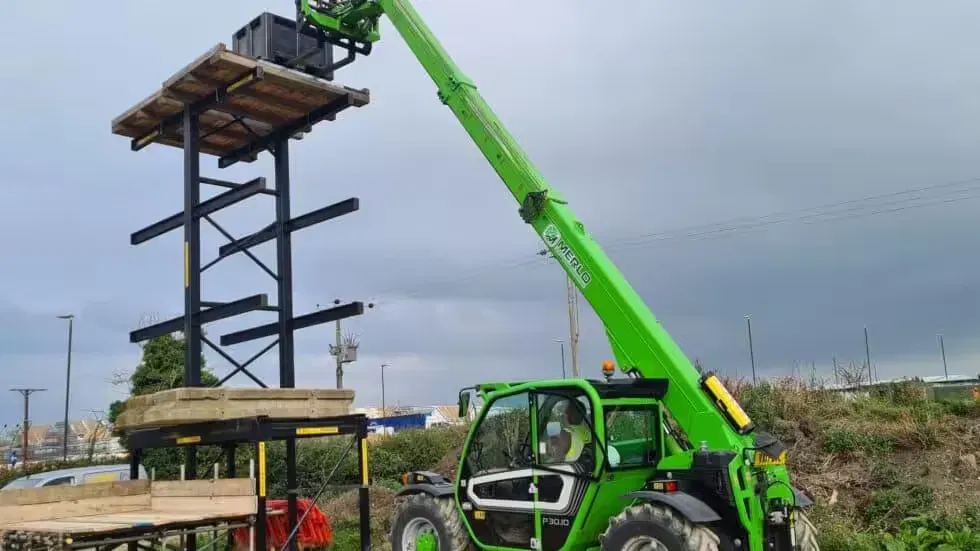
A telehandler, also known as a telescopic handler or telescopic forklift, is widely used across construction, housebuilding, agriculture and industrial sites for lifting, carrying and placing materials.
Our telescopic handler training covers the same core NPORS telehandler category, with our Telehandler course tailored to the operator's existing experience and the type of work they need to carry out.
Train at our dedicated plant training centre in Tewkesbury, Gloucestershire, conveniently located close to Junction 9 of the M5, or arrange on-site telehandler training anywhere in the UK where suitable machinery and facilities are available.
Choose from novice telehandler courses, Experienced Worker Tests (EWT) and refresher telehandler training depending on your existing operating experience.
Businesses can arrange telescopic handler training for multiple operators at their own workplace, making on-site delivery particularly useful for construction companies, groundworks contractors, builders, agricultural businesses, warehouses and employers with their own telehandler fleet helping you gain your Telehandler licence.
NPORS N010 Telehandler Training Course (At a glance)
- Course: Telehandler Training / Telescopic Handler Training
- Training Routes: Novice • Experienced • Refresher
- Novice Course: Up to 5 Days
- Experienced Test: Approximately 2–3 Hours Per Candidate
- Delivery: Tewkesbury Centre • UK-Wide On-Site
- Certification: NPORS N010 • In-House Option Available
Which Telehandler Training Course Do I Need?
Choosing the right telehandler training course depends primarily on how much genuine operating experience you already have.
Novice Telehandler Training
Our novice N010 NPORS telehandler training course is designed for complete beginners and operators who do not yet have sufficient experience to attempt an assessment without training.
The course combines theory and practical machine operation, progressively developing the skills needed to operate a telescopic handler safely.
Novice training can take up to five days, depending on experience and candidate requirements.
Experienced Telehandler Operator Test
Already use a telehandler competently at work?
Experienced operators may be suitable for an NPORS Experienced Worker Test (EWT) instead of completing the full novice course.
An experienced test typically takes approximately 2–3 hours per candidate and is an assessment route rather than shortened training.
Candidates should already be confident with machine controls, pre-use checks, stability principles, load handling, travelling, stacking and safe shutdown procedures.
Telehandler Refresher Training
Previously trained operators can complete telehandler refresher training to update their knowledge and practical skills.
Refresher training may be appropriate following time away from operating, where an employer has identified a training need or where an operator needs to rebuild confidence with safe machine operation.
What Is a Telehandler?
Train with confidence
Practical skills for safe, competent operators
Choose the right machine category and route for your experience. Our team can discuss novice training, Experienced Worker Tests, refreshers and workplace delivery.
A telehandler — also known as a telescopic handler, telescopic forklift or telescopic materials handler — combines features of a forklift with an extending telescopic boom.
Telehandlers are widely used throughout:
Construction & Infrastructure
- Construction ✓ Housebuilding ✓ Groundworks ✓ Civil engineering ✓ Infrastructure projects
Agriculture & Industry
- Agriculture ✓ Warehousing ✓ Industrial sites ✓ Utilities ✓ Plant hire
Their telescopic boom allows loads to be placed at greater height and reach than many conventional forklift trucks.
That additional reach also means operators need a proper understanding of machine stability, load centres, rated capacity, boom extension, ground conditions and attachment selection.
What Does Telehandler Training Cover?
Telehandler training combines theory with practical machine operation and focuses on the skills needed to operate safely and competently.
Depending on the training route, subjects can include pre-use inspections, controls, manoeuvring, load assessment, machine stability, rated capacity, lifting and placing loads, boom extension, stacking and de-stacking, ground conditions, gradients, pedestrian awareness, defect reporting and safe shutdown procedures.
Training also covers operator responsibilities and manufacturer guidance, helping candidates understand how machine configuration and working conditions can affect safe operation.
Course topic tiles
- Pre-Use & Engine Checks: Daily inspections, fluid levels, warning systems, safety devices, defect identification and correct reporting procedures.
- Tyres, Steering & Brakes: Tyre condition and pressure, wheel security, steering modes, service brakes, parking brake and safe manoeuvring.
- Hydraulics & Boom: Hydraulic systems, hoses, cylinders, boom condition, extension, elevation and the effect of boom movement on stability.
- Forks & Attachments: Fork condition and positioning, carriage checks, attachment compatibility and changes to the machine's operating capacity.
- Load Charts & Capacity: Reading load charts and understanding rated capacity, load centres, boom angle, lift height and working reach.
- Stability & Ground Conditions: Assessing ground suitability, gradients, crossfalls, overhead hazards, exclusion zones and changing site conditions.
- Travelling with Loads: Correct travel position, observation, speed control, negotiating gradients and maintaining stability while carrying a load.
- Stacking & Placing Loads: Picking up, carrying, stacking, de-stacking and placing loads accurately at ground level and height.
- Shutdown & Defect Reporting: Safe parking, lowering the boom and attachment, isolating the machine and reporting defects at the end of operation.
Telehandler Stability and Load Capacity
Understanding stability is one of the most important parts of safe telehandler operation.
Unlike a conventional forklift, extending or raising the telehandler boom changes the relationship between the machine and the load.
Factors affecting stability can include:
The Load
Load weight, Load centre, Load security
Boom Position
Boom extension, Boom angle, Lift height and reach
Machine Configuration
Attachment fitted, Tyre condition and pressure, Steering configuration
Working Environment
Ground conditions, Gradients and crossfalls, Travel speed The machine's load chart or rated capacity information must be understood and used correctly.
A load that can be handled safely with the boom retracted may not remain within the machine's capacity when the boom is extended.
Telehandler Attachments
Telehandlers can be used with different attachments, but fitting an attachment can change the machine's operating characteristics and rated capacity.
Common examples include:
- Forks
- Buckets
- Material handling attachments
- Jibs
- Lifting attachments
Operators must understand the attachment being used and any effect it has on the machine's capacity, stability and intended use.
Telehandler Suspended Loads
Are Telehandler Attachments Included in the Course?
Using a telehandler to handle a suspended load introduces additional hazards and responsibilities compared with normal fork operation.
The load can swing, move dynamically and affect the stability of the machine differently from a load supported directly on the forks.
Load Charts and Rated Capacity
Being able to interpret a telehandler's load chart is essential.
The amount a machine can safely lift depends on more than the maximum capacity printed on the machine.
Capacity can change according to: boom extension • lift height • load centre • attachment • machine configuration Operators need to establish whether the intended load remains within the manufacturer's rated capacity for the actual lifting position.
This is particularly important when loads need to be placed at height or reach.
Daily Telehandler Checks and Defect Reporting
Operators should complete appropriate pre-use checks before putting a telehandler into service.
Checks can include:
Engine & Fluid Checks
- Engine oil and coolant ✓ Hydraulic fluid and fuel ✓ Leaks and visible damage ✓ Warning systems and gauges
Tyres, Wheels & Controls
- Tyre condition and pressure ✓ Wheels and wheel security ✓ Steering and braking systems ✓ Lights, alarms and safety devices
Boom, Forks & Carriage
- Hydraulic hoses and cylinders ✓ Boom structure and wear points ✓ Forks, carriage and locking devices ✓ Attachment security and condition
The exact inspection should follow the manufacturer's instructions and workplace procedures.
Any defects identified should be reported correctly, and safety-critical defects may require the telehandler to be taken out of service.
Telehandler Training Near Me – Tewkesbury, Gloucestershire
If you're looking for telehandler training near you and don't have access to a suitable machine, you can complete your course at our dedicated training centre in Tewkesbury, Gloucestershire.
Our training centre is conveniently located close to Junction 9 of the M5, making it accessible from Gloucester, Cheltenham, Worcester, Evesham, Birmingham, Bristol and the wider Midlands and South West.
Ashchurch for Tewkesbury railway station is approximately a five-minute walk from the training centre, making rail travel possible for candidates without their own transport.
Parking is also available.
UK-Wide On-Site Telehandler Training
For employers with suitable machinery and facilities, we can bring telehandler operator training directly to your workplace anywhere in the UK.
On-site training can be particularly cost-effective where several employees require:
- Novice training
- Experienced Worker Tests
- Refresher training
- Operator familiarisation
- Multiple plant categories
Training operators on the machinery and in the type of environment they use at work can also make the course particularly relevant to the employer's operation.
On-Site Telehandler Training Requirements
For workplace training, suitable machinery and facilities must be available.
These can include:
Machine & Documentation
- Suitable telehandler ✓ Machine in safe working condition ✓ Manufacturer's operator manual ✓ Relevant inspection and examination records
Loads & Training Area
- Suitable loads and pallets ✓ Safe manoeuvring area ✓ Stacking and place-at-height facilities ✓ Controlled pedestrian access
Site & Candidate Requirements
- Risk assessments and safe systems of work ✓ Candidate photo identification ✓ Appropriate PPE ✓ Evidence of experience for EWT candidates
PPE for Telehandler Training
STANDARD PPE
- Safety boots ✓ High-visibility clothing ✓ Safety helmet ✓ Suitable workwear
ADDITIONAL PPE WHERE REQUIRED
- Gloves ✓ Eye protection ✓ Hearing protection ✓ Site-specific PPE
NPORS or In-House Telehandler Training?
Vally Plant Training can provide NPORS Telehandler Training or an in-house training option, depending on how and where the operator will use the machine.
NPORS is generally appropriate where recognised NPORS registration or an Operator Card is required by employers, contractors or construction sites.
In-house training can suit businesses whose employees operate company machinery within their own working environment, provided the certification meets the requirements of the employer, client, site and insurer.
An in-house certificate is not the same as an NPORS Operator Card.
Telehandler Training Prices – How Much Does a Telehandler Course Cost?
The cost of a telehandler training course depends on the operator's experience, course route, location and whether training is completed at our Tewkesbury centre or on-site at your workplace.
Experienced operators may only require an EWT, while complete beginners require structured novice training.
Experienced Telehandler Test – From £360 + VAT Experienced and competent operators may be suitable for an NPORS Experienced Worker Test rather than completing novice training.
Novice Telehandler Course – From £1,350 + VAT Complete beginners can undertake structured novice Telehandler Training at our Tewkesbury training centre, with training lasting up to five days depending on the course requirements.
On-site training is quoted separately because candidate numbers, travel, training requirements and available equipment can affect the booking.
Employers training several operators or combining multiple plant categories should contact us for a quotation.
NPORS Telehandler Test, Assessment & Certification
Telehandler assessment includes both theoretical knowledge and practical machine operation.
Candidates need to demonstrate that they can prepare the machine for work, interpret relevant capacity information, operate safely, handle loads correctly and complete the required practical activities to the expected standard.
Successful candidates following the NPORS route can receive the applicable NPORS registration and Operator Card subject to the relevant scheme requirements.
What Certification Do I Receive After Telehandler Training?
Candidates who successfully complete the appropriate theory and practical assessment can receive NPORS certification for the N010 Telescopic Handler category.
The available card route depends on the candidate's experience, employment requirements and whether a CSCS-logo card is required.
Red Telehandler Card to Blue Competent Operator Card
Vally Plant Training provides workplace-based Plant Operations NVQ assessment for experienced operators who are already carrying out the relevant job.
There are no classroom exams.
Evidence can be collected through workplace observation, questioning, professional discussion and supporting documentation.
CITB Funding for Telehandler Training
Eligible employers may be able to access CITB funding for qualifying telehandler training, subject to current CITB eligibility and funding requirements.
Vally Plant Training is a CITB Training Provider Network Member.
If your company is CITB registered, tell us when requesting your quotation.
Why Choose Vally Plant Training?
Direct Training Provider
Practical Telehandler Training Built Around the Operator
Telehandler operators need to understand more than the machine controls.
They must be able to assess ground conditions, interpret load charts, recognise changing capacity and maintain stability as the boom is raised or extended.
Training at our dedicated Tewkesbury centre gives candidates structured practical time using suitable machinery, loads and training facilities.
We can also deliver training on customer sites throughout the UK, making the course relevant to the telehandler and working environment used by your operators.
Vally Plant Training is a family-run, direct training provider established in 2014.
We support individuals and employers from the initial enquiry through to training, assessment, NPORS registration and ongoing NVQ progression.
Why train with Vally Plant Training?
- NPORS Approved Training Provider
- Family-run and established in 2014
- Dedicated Tewkesbury training centre
- Nationwide customer-site delivery
- One-to-one novice training available
- Novice, refresher and EWT routes
- NPORS N010 Telehandler Training
- CITB funding may be available
- Five-star customer reviews
Build Your Telehandler & Lifting Skills
Additional training for operators and lifting teams working with telehandlers and material-handling equipment.
Telehandler Training & Certification Guides
Understand your training options before choosing a novice, experienced or refresher route.
Telehandler Operator & Safety Guides
Practical guidance covering telehandler tickets, safety, stability and lifting operations.
Book Your Telehandler Course or Train Your Workforce
Tell us whether you're a complete beginner, experienced telehandler operator or need refresher training.
Businesses can also send us candidate numbers, site location and available machinery so we can quote for on-site workforce training.
Enquire About Telehandler Training / Read Telehandler Training Guide Company booking?
Include candidate numbers, existing operator experience and your site postcode when requesting a quotation.