
Vehicle Banksman Training - Safer Vehicle Movements. Confident, Trained Banksmen.
Need Vehicle Banksman Training for yourself or your team?
Build practical skills to guide reversing and manoeuvring vehicles safely.
Our courses cater for novice and experienced candidates.
Training for Your Team: On suitable customer sites throughout the UK.
Booking for Yourself or Your Team?: At our Tewkesbury centre in Gloucestershire.
Call 01684 297167.
Enquire About Banksman Training.
Looking for Vehicle Banksman or Vehicle Marshal Training?
Need Vehicle Banksman Training for yourself, or have employees responsible for guiding reversing vehicles and controlling vehicle movements at work?
Vally Plant Training provides practical NPORS Vehicle Banksman and Vehicle Marshal Training for individuals and businesses, covering safe reversing, recognised signals, driver communication, blind spots, safe positioning and pedestrian safety.
Training is available at our Tewkesbury, Gloucestershire training centre, or we can deliver on-site Vehicle Banksman Training throughout the UK for employers with suitable facilities.
Need Vehicle Banksman Training for Your Team?
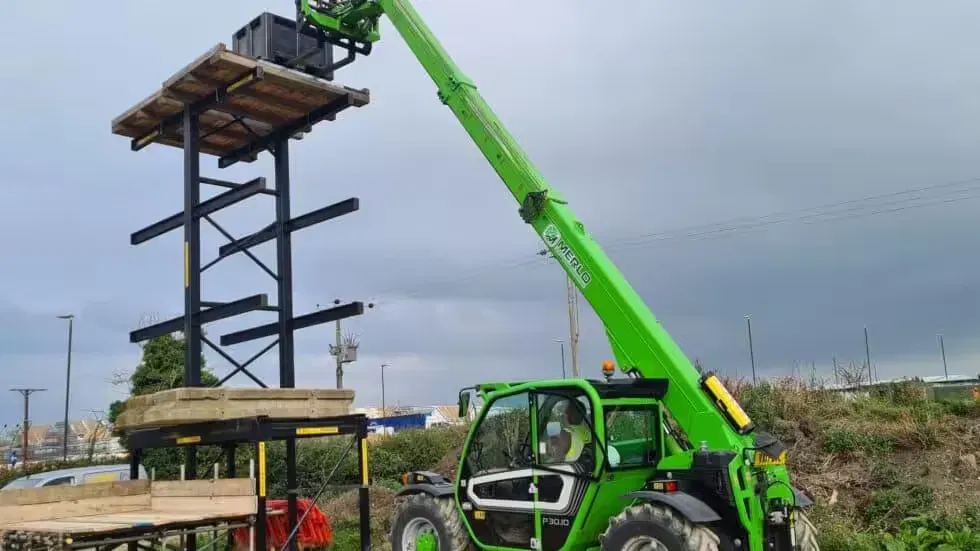
We deliver NPORS Vehicle Banksman and Vehicle Marshal Training on suitable customer sites throughout the UK.
Train employees responsible for reversing operations, guiding workplace vehicles and helping maintain safe vehicle and pedestrian movements.
Vehicle Banksman Training at a Glance
- Accreditation: NPORS Accredited Training Provider
- Course: Vehicle Banksman & Vehicle Marshal Training
- Candidates: Individuals & Company Workforces
- Centre: Tewkesbury, Gloucestershire
- On-Site: Training Available UK-Wide
- Employers: Group Bookings Available
Course Focus: Reversing Operations • Vehicle Movements • Banksman Signals • Blind Spots • Safe Positioning • Pedestrian Safety
Is This the Vehicle Banksman Course You Need?
This course is suitable if your job involves guiding or assisting the movement of workplace vehicles such as:
- HGVs and lorries
- Delivery vehicles
- Commercial vehicles
- Vans
- Site vehicles
- Other workplace transport
It is particularly useful where vehicles need to reverse or manoeuvre in areas with restricted visibility, limited space, pedestrians, buildings or other workplace hazards.
If you are unsure, tell us what you are expected to guide at work and we can help establish the correct course before you book.
How Long Does Vehicle Banksman Training Take?
For a complete beginner, Vehicle Banksman Training is typically a one-day course.
Experienced Vehicle Banksmen or Vehicle Marshals who already carry out the role may be suitable for the experienced assessment route taking approx.
2-3 hours.
Refresher training is also available for existing banksmen who need to update their knowledge and practical skills.
The correct route depends on your previous experience rather than simply how long you have worked on a particular site.
Why Choose Vally Plant Training?
Our training is practical.
Candidates don't just sit in a classroom learning hand signals; they have the opportunity to practise guiding vehicles and communicating with drivers in controlled situations.
We offer:
Train with confidence
Practical skills for safe, competent operators
Choose the right machine category and route for your experience. Our team can discuss novice training, Experienced Worker Tests, refreshers and workplace delivery.
- NPORS accredited Vehicle Banksman Training
- Novice and experienced routes
- Refresher training
- Practical vehicle marshalling exercises
- Training at our Tewkesbury centre
- On-site company training throughout the UK
- Group bookings
- Experienced instructors
- Help choosing the correct course before booking
What Is Vehicle Banksman Training?
Vehicle Banksman Training teaches a person how to safely assist drivers when vehicles are reversing or carrying out difficult manoeuvres.
A Vehicle Banksman is also commonly called a Vehicle Marshal.
The banksman acts as an additional pair of eyes for the driver, particularly where the driver's view is restricted.
This doesn't mean simply standing behind a vehicle and waving it backwards.
The banksman needs to understand where to position themselves, how to remain visible to the driver, what signals to use, where pedestrians may enter the area and when a vehicle movement needs to stop.
What Does a Vehicle Banksman Do?
The exact duties depend on the workplace, but a Vehicle Banksman may be responsible for:
- Guiding reversing vehicles
- Assisting drivers during difficult manoeuvres
- Using recognised vehicle marshalling hand signals
- Maintaining communication with the driver
- Identifying blind spots
- Checking the intended vehicle route
- Watching for pedestrians
- Maintaining a safe position
- Keeping clear of vehicle danger areas
- Stopping movement if conditions become unsafe
One of the most important principles is communication.
If the driver loses sight of the banksman or either person becomes unsure about what is happening, the vehicle movement should stop until safe communication has been re-established.
Why Is Vehicle Banksman Training Important?
Reversing is one of the higher-risk vehicle movements in many workplaces.
Drivers of HGVs, lorries and commercial vehicles can have substantial blind spots.
Even with mirrors, cameras and warning systems, there can be areas around the vehicle that are difficult or impossible for the driver to see clearly.
The problem becomes greater where vehicles and pedestrians share the same workplace.
A trained Vehicle Banksman can help manage a difficult manoeuvre, but the banksman must also understand how to avoid putting themselves in danger.
Standing in the wrong position can place the banksman between the moving vehicle and a fixed object or directly within the vehicle's path.
Good banksman training therefore concentrates just as much on where not to stand as it does on hand signals.
Which Vehicle Banksman Course Do I Need?
Novice Vehicle Banksman Training
The novice course is suitable for candidates with little or no previous experience of vehicle marshalling.
Training covers the basic principles before candidates move on to practical exercises.
For novice candidates, the course is normally completed in one day.
Experienced Vehicle Banksman Assessment
The experienced route is intended for people who already carry out Vehicle Banksman or Vehicle Marshal duties and can demonstrate the required knowledge and practical ability.
This isn't intended as a shortcut for somebody who has never performed the role.
Vehicle Banksman Refresher Training
Refresher training is available for existing Vehicle Banksmen who need to update their knowledge or revisit practical vehicle-guidance skills.
This can be particularly useful where somebody has not carried out the role regularly or an employer wants to refresh workplace transport procedures.
What Will I Learn on the Vehicle Banksman Course?
Training combines theory with practical vehicle marshalling.
Subjects can include:
- Vehicle Banksman responsibilities
- Workplace transport hazards
- Reversing vehicle risks
- Vehicle blind spots
- Safe positioning
- Driver and banksman communication
- Recognised hand signals
- Checking the manoeuvring area
- Pedestrian safety
- Vehicle routes
- Hazard identification
- Maintaining visibility
- Emergency stop procedures
- Practical vehicle guidance
- What to do if communication is lost
The aim is to give the candidate a clear and repeatable system for assisting vehicle movements rather than relying on improvised signals.
Vehicle Banksman Hand Signals
Clear signals between the banksman and driver are essential.
The driver needs to understand exactly what the banksman is asking them to do.
Hand signals should therefore be agreed and clearly understood before the manoeuvre begins.
Candidates learn how to use appropriate Vehicle Banksman hand signals and how to position themselves so the driver can see them.
The operator should never assume that a driver has understood a signal simply because the vehicle has started moving.
Communication needs to remain clear throughout the manoeuvre or you should use Radios.
Vehicle Blind Spots
Understanding vehicle blind spots is a major part of safe vehicle marshalling.
Large vehicles can have areas around them that the driver cannot see clearly from the cab.
These can change depending on the vehicle design, mirrors, cameras and the direction in which the vehicle is moving.
The banksman needs to understand these areas and avoid disappearing into them.
A useful rule during practical vehicle guidance is simple: if the banksman cannot see the driver, the driver may not be able to see the banksman.
Safe Positioning of the Vehicle Banksman
A banksman must never place themselves in a position where a mistake by the driver could trap or crush them.
Particular care is required around:
- Walls
- Buildings
- Parked vehicles
- Loading bays
- Storage areas
- Gates
- Fixed structures
- Pedestrian routes
- Restricted spaces
The safest position will depend on the vehicle, workplace and manoeuvre.
The banksman needs to remain visible while also keeping clear of the vehicle's path and potential trapping areas.
Practical Vehicle Marshalling Training
Practical exercises are an important part of the course.
Candidates practise communicating with a driver and guiding vehicle movements in a controlled environment.
Exercises can include:
- Checking the intended route
- Identifying hazards
- Positioning correctly
- Establishing communication
- Using recognised hand signals
- Guiding reversing movements
- Controlling changes of direction
- Monitoring pedestrians and other hazards
- Stopping the vehicle safely
- Responding if communication is lost
Where the course is delivered at a customer's workplace, practical exercises can use suitable vehicles relevant to the company's normal operations.
Vehicle Banksman vs Vehicle Marshal
In many workplaces, Vehicle Banksman and Vehicle Marshal are used to describe essentially the same type of role: a person assisting and directing workplace vehicle movements.
The terminology used by employers and sites can vary.
What matters more than the job title is that the person understands how to safely guide the type of vehicle they are responsible for and understands the workplace's traffic-management arrangements.
Vehicle Banksman vs Plant Banksman
This is where there is an important difference.
A Vehicle Banksman primarily guides workplace vehicles such as HGVs, lorries, delivery vehicles and commercial vehicles.
A Plant Banksman or Plant Marshal is primarily concerned with the movement of construction plant such as:
- Excavators
- Dumpers
- Telehandlers
- Loading shovels
- Rollers
- Other mobile plant
The roles have some similar principles, particularly communication, visibility and safe positioning, but they should not simply be treated as interchangeable.
Vehicle Banksman vs Traffic Marshal
The terms Vehicle Banksman and Traffic Marshal are also sometimes used interchangeably, but the responsibilities can be different.
A Vehicle Banksman is generally focused on directly assisting a driver during vehicle manoeuvres.
A Traffic Marshal may have wider responsibilities for controlling vehicle access, traffic flow, delivery movements and pedestrian segregation as part of a site's traffic-management arrangements.
The correct training should match the actual duties you are expected to perform.
Workplace Traffic Management and Pedestrian Safety
Vehicle Banksman Training should be considered as one part of a wider approach to workplace transport safety.
Where possible, workplaces should be designed to reduce the need for reversing and minimise interaction between vehicles and pedestrians.
This can include:
- Designated vehicle routes
- Pedestrian walkways
- Suitable crossing points
- One-way systems
- Delivery areas
- Barriers
- Signs
- Lighting
- Reversing aids
- Site rules
A banksman can help manage particular vehicle movements, but the presence of a banksman should not be used as a substitute for good workplace traffic management.
What Happens if the Driver Loses Sight of the Banksman?
The vehicle should stop.
This is one of the most important practical rules taught during Vehicle Marshal Training.
If the driver can no longer see the banksman, or the banksman is no longer certain that the driver can see and understand the signals being given, the manoeuvre should not simply continue.
Communication should be re-established before movement resumes.
What Vehicles Can Be Used for Vehicle Banksman Training?
Training can involve different types of workplace transport depending on the course location and the employer's requirements.
Suitable vehicles can include:
- HGVs
- Lorries
- Delivery vehicles
- Commercial vans
- Workplace transport vehicles
- Other appropriate vehicles used by the employer
For company training, tell us what vehicles your banksmen normally guide so we can discuss the most appropriate training arrangements.
Vehicle Banksman Course Entry Requirements
There are no formal previous-experience requirements for somebody completing the novice course.
Candidates should be able to understand the safety instruction being provided and participate safely in the practical exercises.
Suitable PPE will be required for the practical element of the course.
How Is Vehicle Banksman Training Assessed?
Candidates are assessed on both their knowledge and their practical ability to guide workplace vehicles safely.
The assessment route depends on the candidate's previous experience, but candidates need to demonstrate that they understand the hazards associated with vehicle movements and can apply the correct procedures during practical exercises.
Being able to remember a set of hand signals alone isn't enough.
The candidate also needs to demonstrate appropriate positioning, awareness and communication.
NPORS Vehicle Banksman Certification
Successful candidates completing the appropriate training and assessment can receive the applicable NPORS Vehicle Marshal certification.
The exact registration or card route should be established before booking so that it matches the requirements of the employer, client or site.
If you are unsure which certification you need, speak to Vally Plant Training before booking.
On-Site Vehicle Banksman Training for Companies
For employers, we can deliver Vehicle Banksman Training on your site using suitable workplace vehicles.
This is often a practical option when several employees need training because it reduces travelling time and allows the training to relate directly to the types of vehicles and working environment candidates normally encounter.
Before training takes place, the site needs to provide suitable facilities and a safe practical training area.
We can discuss the requirements with you before confirming the course.
Vehicle Banksman Training Near Me – Gloucestershire & Nationwide
Looking for Vehicle Banksman Training near you?
Our dedicated training centre is based in Tewkesbury, Gloucestershire, close to Junction 9 of the M5 and Ashchurch for Tewkesbury railway station.
The centre is convenient for candidates travelling from Gloucester, Cheltenham, Worcester, Evesham and surrounding areas.
For employers, we provide on-site Vehicle Banksman and Vehicle Marshal Training throughout the UK, subject to suitable facilities and vehicles being available.
Industries That Use Vehicle Banksmen
Vehicle Banksmen are used across many industries where large vehicles regularly enter, leave or manoeuvre around workplaces.
These can include:
- Construction
- Logistics
- Warehousing
- Manufacturing
- Distribution
- Civil engineering
- Utilities
- Recycling and waste
- Local authorities
- Industrial sites
- Agriculture
The type of vehicle may change, but the underlying principles of communication, visibility and safe positioning remain important.
Related Training Courses
The strongest related courses are:
- Plant Banksman Training
- Slinger Signaller Training
- CAT & Genny Training
Book Vehicle Banksman Training
Need Vehicle Banksman Training for yourself or employees responsible for reversing and manoeuvring workplace vehicles?
Vally Plant Training provides practical NPORS Vehicle Marshal Training for beginners, experienced workers and companies.
Training is available at our Tewkesbury training centre in Gloucestershire or on suitable customer sites throughout the UK.
Tell us how many people need training, where you are based and the type of vehicles they will be guiding, and we can recommend the appropriate course and provide a quotation.
About Vally Plant Training
Vally Plant Training is a family-run plant and workplace training provider based in Tewkesbury, Gloucestershire.
Established in 2014, we provide practical training for individuals, contractors and employers at our dedicated training centre and on customer sites throughout the UK.
We are an NPORS Accredited Training Provider and CITB Training Provider Network Member, with training delivered by experienced instructors using practical workplace scenarios.